WEEE regulations for businesses, explained simply
Old laptops, monitors, printers and kitchen appliances all fall under the WEEE Regulations. Here’s what they mean for your business, in plain English.
· 2 min read · By the WEEE Want Your Waste team
The short version
- WEEE covers nearly anything with a plug or battery, from laptops to vending machines.
- Businesses must keep WEEE separate from general waste and use an authorised route for treatment.
- Data-bearing devices need secure handling as well as compliant recycling.
What counts as WEEE?
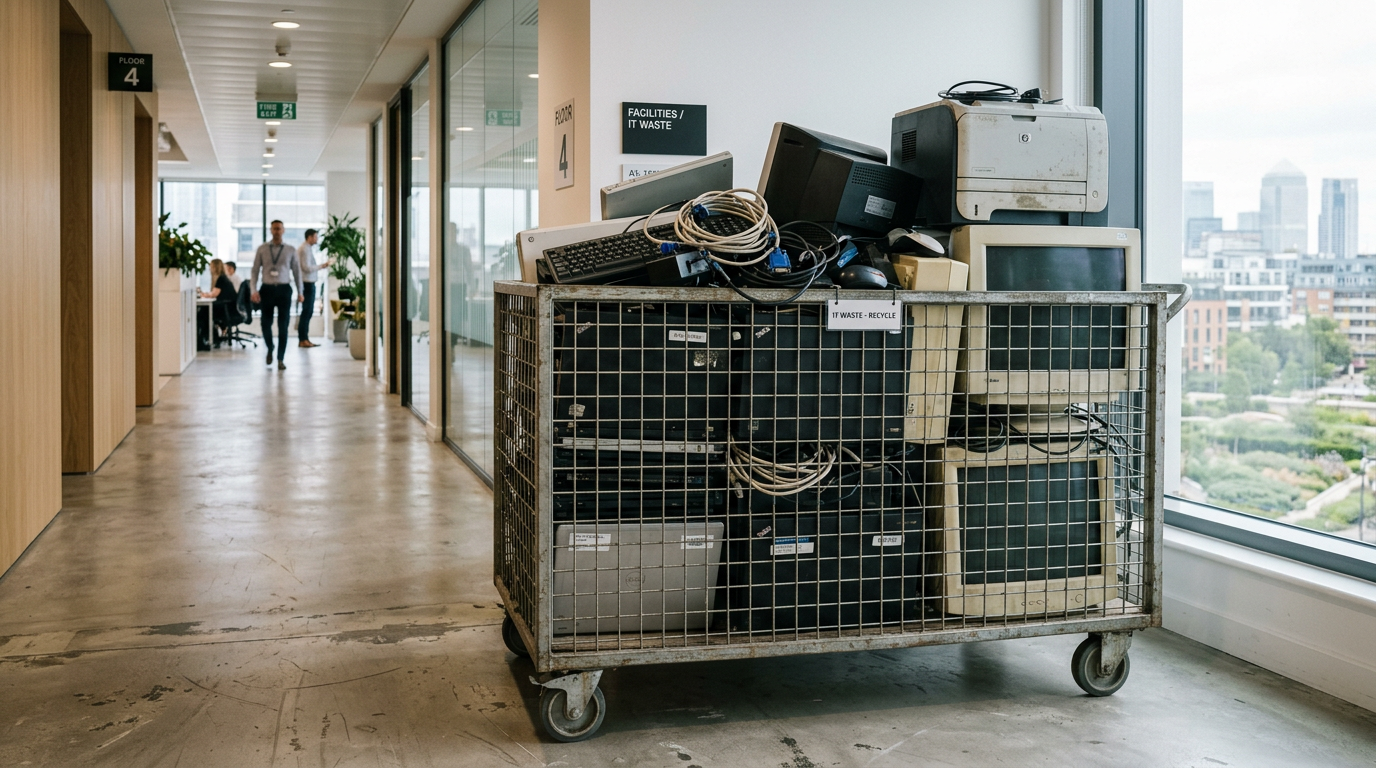
WEEE stands for Waste Electrical and Electronic Equipment. If it needed a plug, a battery or a cable to work, it almost certainly counts. That includes IT equipment, screens, phones, printers, kitchen appliances, power tools, lighting, and of course fridges and freezers.
What your business has to do
- Keep electrical waste separate from general and mixed recycling.
- Store it safely so it isn’t damaged or stolen before collection.
- Hand it only to a registered waste carrier who takes it to an approved treatment facility.
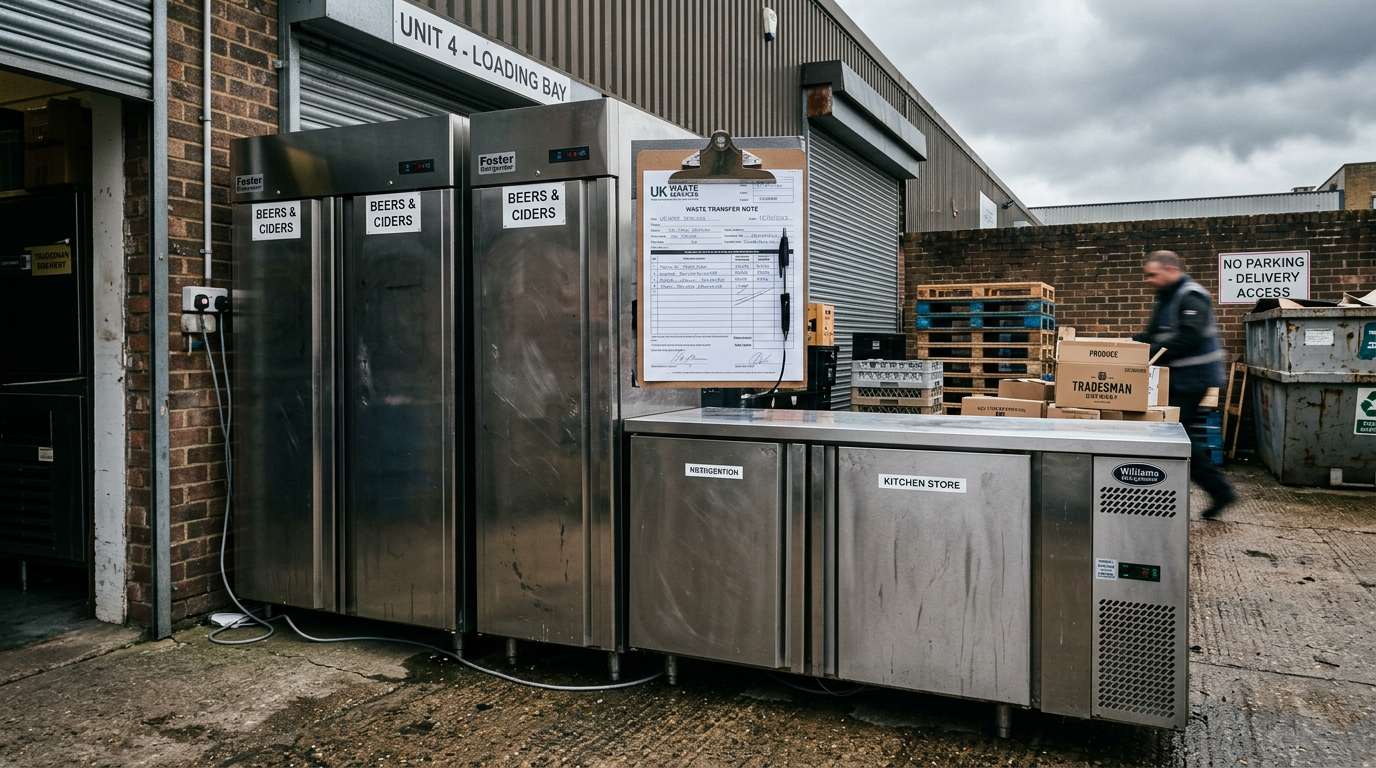
- Keep waste transfer notes (or consignment notes for hazardous items such as screens and fridges).
Don’t forget the data
Laptops, desktops, servers and phones hold personal data. Under UK GDPR you’re responsible for that data until it’s securely destroyed. Wipe or remove drives before collection, or ask your collector about secure handling. See our IT equipment recycling service.
Getting started
Most offices build up a cupboard of dead electricals faster than they realise. Book a single WEEE collection to clear the backlog, then set a regular schedule so it doesn’t build up again.
Common questions
Can businesses put small electricals in general waste?
No. Electrical waste must be kept separate and sent for authorised treatment, whatever its size.
Do I need paperwork for a WEEE collection?
Yes. You need a waste transfer note for non-hazardous WEEE, or a consignment note for hazardous items such as fridges and some screens.