Fluorescent tube recycling: what businesses need to know
Switching to LED? The old tubes contain mercury and count as hazardous waste. Here’s how to store, move and recycle them without breaking the rules.
· 2 min read · By the WEEE Want Your Waste team
The short version
- Fluorescent tubes and low-energy lamps contain mercury and are hazardous waste.
- In England, hazardous waste must move on a consignment note.
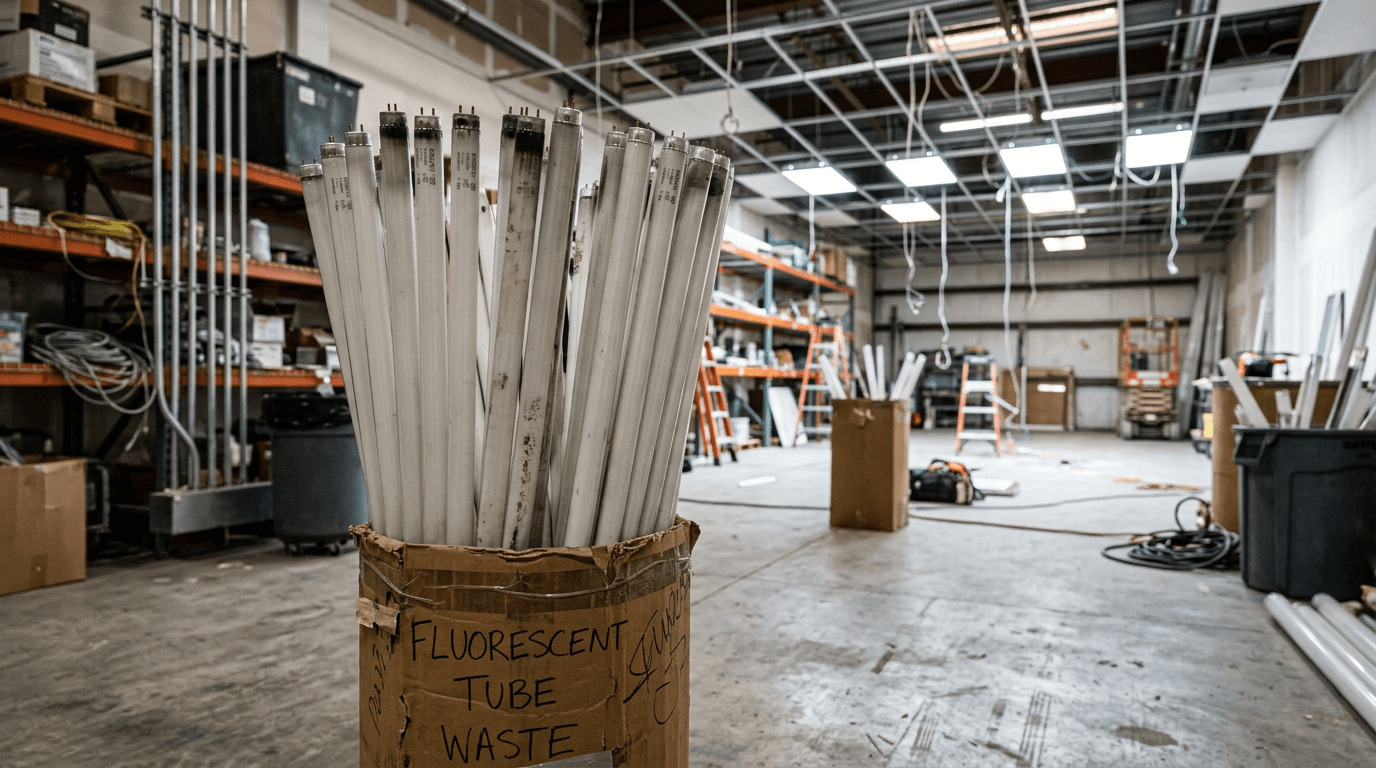
- Store tubes whole and upright in a box or container so they don’t break.
Why tubes are hazardous
Each fluorescent tube contains a small amount of mercury vapour along with a phosphor coating. One tube isn’t dangerous on its own, but a building full of them adds up, and broken tubes release mercury into the air. That’s why they’re classed as hazardous waste and must be recycled at a facility that can recover the mercury, glass and metal.
Storing tubes before collection
- Keep tubes whole. Never crush or break them to save space.
- Store them upright in the boxes new tubes came in, or in a dedicated tube container.
- Keep them indoors or under cover, away from foot traffic.
- Store any broken tubes separately in a sealed container and mention them when you book.
The paperwork
Because tubes are hazardous, each collection in England needs a hazardous waste consignment note, which you keep for at least three years. Our fluorescent tube recycling service provides it on the day. For the bigger picture, read WEEE regulations for businesses.
Common questions
Can fluorescent tubes go in general waste?
No. They contain mercury and are hazardous waste, so they must be recycled through an authorised route.
What should I do if a tube breaks?
Ventilate the room, avoid vacuuming, carefully collect the pieces with stiff card and damp paper towels, and seal them in a container. Tell us about broken tubes when you book.