How to dispose of an old fridge in the UK
Retailer take-back, the council, the tip or a licensed collector: here’s every legal way to get rid of a fridge, what each one costs and which is quickest.
· 2 min read · By the WEEE Want Your Waste team
The short version
- Fridges and freezers contain refrigerant gases and insulating foam that must be removed by a specialist, so they can’t go in your general waste.
- You have four legal routes: retailer take-back, council bulky waste, your local tip, or a licensed collector.
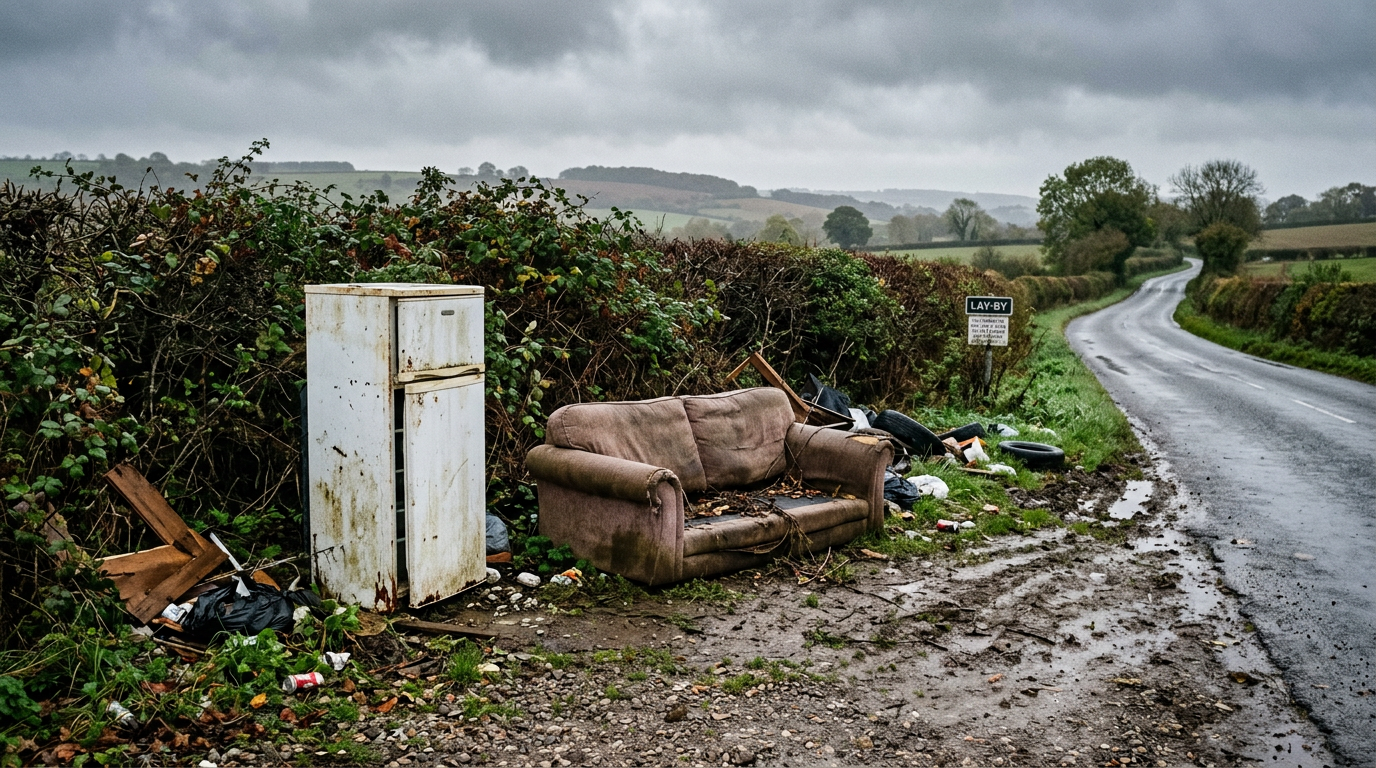
- Whoever takes it must be a registered waste carrier. If it gets fly-tipped, you can be fined.
Why fridges need special disposal
A fridge isn’t just metal and plastic. The cooling circuit holds refrigerant gas, and the walls are packed with foam that, in older units, was blown with CFCs or HCFCs. Released into the air, these gases damage the ozone layer and are powerful greenhouse gases. That’s why fridges and freezers are treated as hazardous electrical waste and have to go to a facility that can recover the gas and foam safely.
In practice that means three things: it can’t go in a skip, it can’t go in the household bin, and it can’t be left out for a scrap collector who isn’t licensed to carry it.
Your four legal options
1. Retailer take-back when you buy a new one
Under the WEEE Regulations, shops selling you a new appliance must offer to take back your old one like-for-like. Most charge for collecting from your home, and the old unit usually has to be disconnected, defrosted and ready on the day the new one arrives.
2. Council bulky waste collection
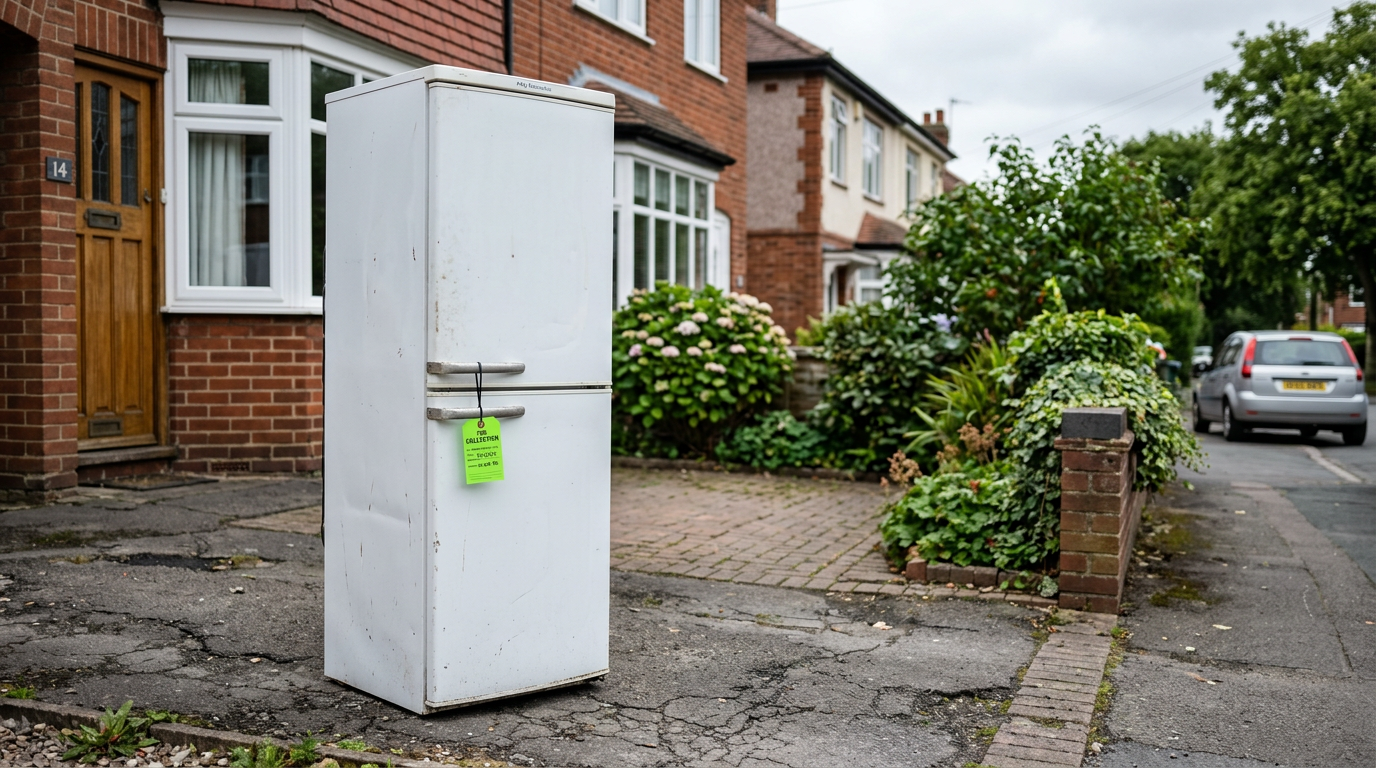
Most councils collect fridges for a fee. Prices and waiting times vary a lot by area. Some have waits of several weeks, and most will only collect from the kerbside.
3. Take it to your local tip
Household waste recycling centres accept fridges free of charge from residents. You’ll need a vehicle big enough to carry it upright and someone to help lift it. Many sites also need you to book a slot in advance.
4. Book a licensed collector
A registered waste carrier collects on a date that suits you and takes the fridge to an approved treatment facility. This is usually the quickest option and the only practical one if you have several units or no van. Book a fridge collection and you’ll see the price before you confirm.
| Option | Typical cost | Speed | Best for |
|---|---|---|---|
| Retailer take-back | £20–£40 | On delivery day | Replacing like-for-like |
| Council bulky waste | £20–£60 | 1–4 weeks | Single item, no rush |
| Local tip | Free | When you can get there | You have a van and a helper |
| WEEE Want Your Waste | From £69, then £45 each | Within days | Speed, several units, no van |
Always check the carrier’s licence
Anyone who takes waste away for you must hold a waste carrier registration. You can check a registration number for free on the GOV.UK public register in under a minute. If a cheap “man with a van” fly-tips your fridge, the council can trace it back to you, and householders can be fined for failing in their duty of care. We explain how in our guide to fly-tipping and your duty of care.
Common questions
Can I put a fridge in a skip?
No. Fridges and freezers are hazardous electrical waste because of the refrigerant gases and foam inside them. Skip companies won’t accept them and you risk extra charges.
How much does fridge collection cost?
Our domestic fridge and freezer collection is £69 for the first unit and £45 for each additional unit on the same booking.
Do I need to defrost my fridge before collection?
Yes. Switch it off and leave the doors open for about 24 hours beforehand, and remove all food and loose shelves.