Mattress disposal: your options and what it really costs
Mattresses are bulky, awkward and one of the most fly-tipped items in Britain. Here’s how to get rid of one properly, and what each option costs.
· 2 min read · By the WEEE Want Your Waste team
The short version
- Mattresses can’t go in your household bin, and leaving one in the street counts as fly-tipping.
- Most of a mattress can be recycled, including the steel springs, foam and fabric.
- We collect mattresses for £45 for the first and £35 for each one after.
Why mattresses are a problem
A double mattress takes up the space of several wheelie bins in landfill and doesn’t compress well, so it sits there for decades. The good news is that most of it can be recovered. The steel springs go back into metal recycling, and the foam and fibres can be reprocessed into new products.
Ways to get rid of an old mattress
- Council bulky waste collection. Usually paid, often with a wait, and normally kerbside only.
- Your local tip. Free for residents, but you need a vehicle big enough to carry it.
- Retailer take-back. Some bed retailers will remove your old mattress when they deliver a new one, often for a fee.
- Charity reuse. Only possible if the mattress is in excellent condition and still has its fire safety label.
- A licensed collector. Booked for a date that suits you, with multiple mattresses taken in one visit.
| Number of mattresses | Total price |
|---|---|
| 1 | £45 |
| 2 | £80 |
| 3 | £115 |
| 4 | £150 |
Getting your mattress ready
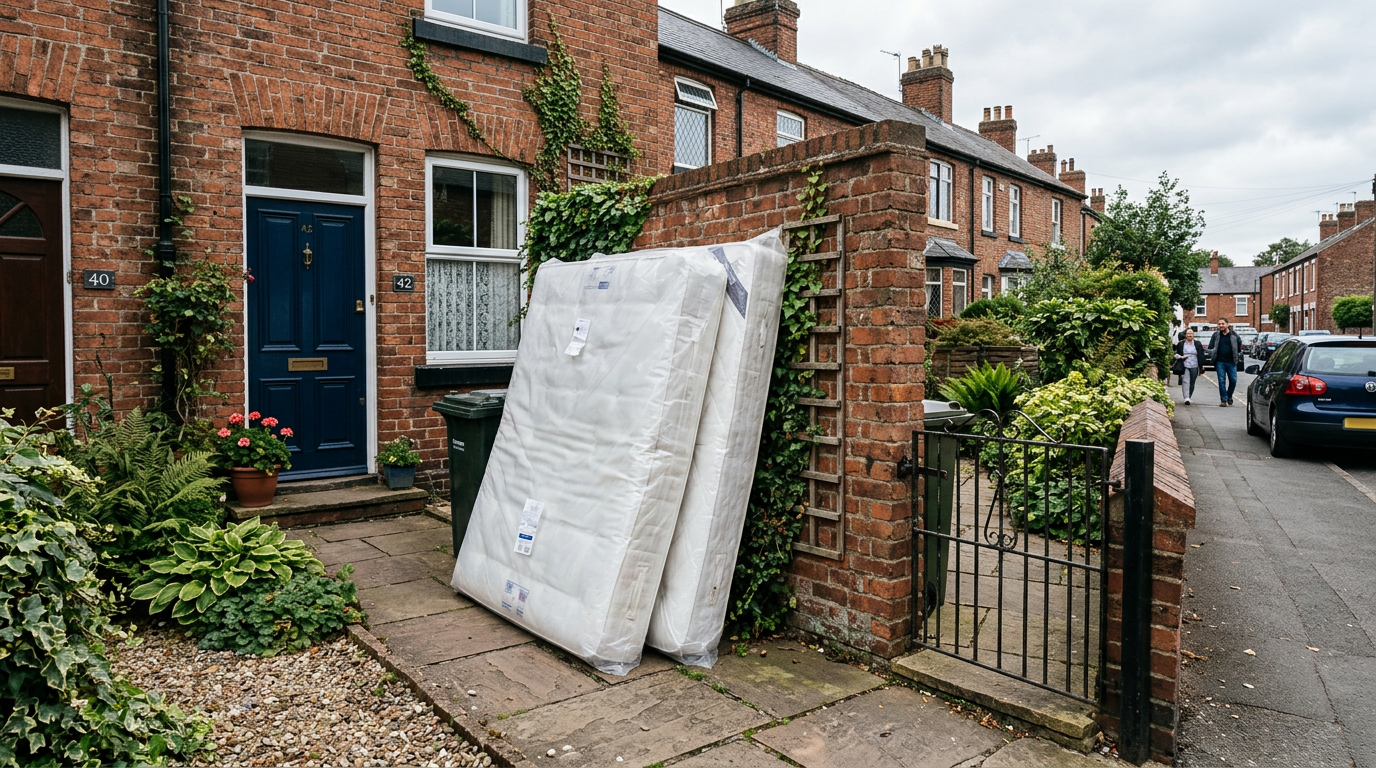
Strip the bedding and, if you can, wrap the mattress in a plastic bag or sheet to keep it dry. Have it outside or just inside the ground floor with a clear route to the door. Our collection preparation checklist covers everything else.
Common questions
How much does mattress collection cost?
£45 for the first mattress and £35 for each additional mattress on the same booking.
Do you collect divans and bed bases?
Yes. Tell us about them when you book and we’ll include them in the collection.
Do mattresses need to be outside?
Yes. They need to be outside or on the ground floor with clear access for loading.